Sheds, Beds and Low Frequencies: The Allotment Gigs Rewriting Britain's Live Music Rules
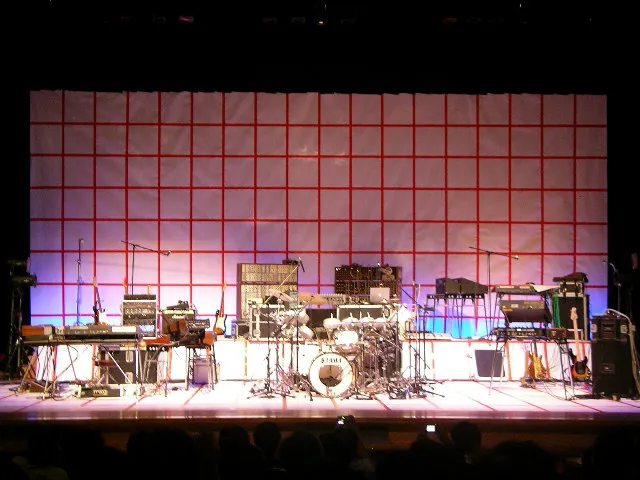
Photo: Kazuhisa OTSUBO, CC BY 2.0, via Wikimedia Commons
The first thing you notice is not the music. It is the compost. On a Sunday afternoon in Leeds, a modular synth has been set up on a potting bench between two raised beds. The patch cables are colour-coded. The audience — twenty-eight people, a dog and a toddler in wellies — is sitting on upturned crates. A hand-painted sign reads: Please keep to the paths. The bass is on a timer.
This is an allotment rave, though nobody in the room would use that phrase without a wince. From Leeds to Cardiff and across Fife, allotment societies are hosting daytime sets: ambient, modular, folk-drone, the occasional hushed acoustic turn. The music is quiet, the crowds are tiny and the setting is a working vegetable plot. It is also, unexpectedly, one of the most interesting live formats in the UK right now.
A different kind of soundcheck
A normal gig soundcheck is about volume. An allotment soundcheck is about distance. How far does the sound travel over the bean frames? Which neighbour has a shed on the other side of the hedge? Is that a road, a school or a hospital? Promoters walk the site before doors, listening from the edges.
'The first thing we do is introduce ourselves to the people whose plots back onto the performance area,' says one organiser in Fife. 'We tell them the times. We tell them what kind of sound it is. We invite them. Most of them come. The ones who don't want it get a say. That is not a nicety. It is the only way it works.'
Sets tend to run between 11am and 4pm, when the site is already alive with radios, kettles and children. There are no late licences to chase. There is no bass bin to annoy a bedroom window at midnight. The constraints are not incidental. They shape the music. You cannot play a furious drum solo in a space that has to coexist with a nap, a greenhouse and a neighbour's anxiety about their tomatoes.
The paperwork is part of the art
Allotment societies are not music venues. They are small, often ancient, democratic organisations with constitutions, committees and insurance. Putting on a gig means negotiating a tenancy agreement, a site risk assessment and the question of who is liable if someone trips over a rake. Some promoters operate as guests of a plot-holder. Others apply for a temporary event notice if the site is large enough and the local authority is receptive.
The paperwork sounds dull. In practice, it is where the scene's ethics live. A promoter in Cardiff describes a three-letter rule: a letter to the site committee, a letter to immediate neighbours and a letter to the allotment association's insurer. 'If any of those three say no, we don't do it,' they say. 'We are not trying to sneak one past anyone. We are trying to prove that a quiet gig can be a good neighbour.'
That approach has limits. Not every site has a committee that wants the hassle. Not every neighbour wants to be invited. Some allotment holders are rightly protective of a space that is, for many people, the only quiet ground they have. The scene's best promoters know this. They do not talk about activating a site. They talk about being asked.
Noise is a neighbour, not an enemy
The music itself is often beautiful in a way that feels almost stubborn. Modular synths gurgle and drift. A cello holds a long note while a bee moves through a lavender bush. Folk-drone acts use drones not as a wall but as a haze. At one Leeds set, the loudest thing in the room was a kettle.
That quietness is not a compromise. It is a compositional choice. When you cannot rely on volume, you rely on texture, space and the ambient sound of the site itself. A passing train becomes part of the piece. A plane overhead is an accidental cymbal. The allotment is not a backdrop. It is in the band.
'We started because we wanted to hear music outdoors without the festival scaffolding,' says a promoter in Cardiff. 'No barrier, no wristband, no £9 pint. Just a few people and a plot. The allotment was the only place that would have us. Now it is the reason we do it.'
Why a raised bed beats a black box
There is a practical radicalism to these gigs. They are cheap. They are all-ages by default. They are accessible in the sense that you can leave whenever you like and no one will mind. They are not trying to sell you a lifestyle. They are trying to make a Sunday afternoon feel like it belongs to you.
They are also fragile. A change of committee, a complaint, a wet summer or a rise in insurance can end a series. That fragility is part of why they matter. They are not a genre or an industry. They are a set of small permissions, negotiated again and again. A gig between sheds is a reminder that live music does not need a stage. It needs a room, a reason and a neighbour who says yes.
As the Leeds set ends, the modular rig is packed away and the potting bench returns to being a potting bench. Someone offers the toddler a biscuit. The dog is asleep. The bass, if there was one, has been on a timer all along. It is the quietest rave you will ever attend, and one of the few that leaves the ground exactly as it found it.