The Cabinet Hums Twice: Britain’s Seaside Arcades Are Becoming After-Hours Music Rooms
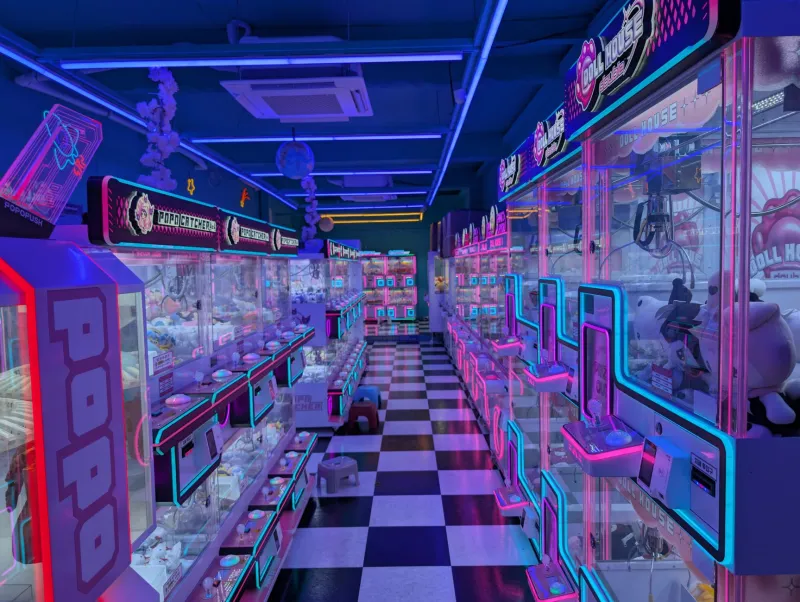
At 9.40 on a wet Thursday in October, the pier arcade is technically closed. The shutters are halfway down, the change machine has been switched off, and the smell of hot doughnuts has been replaced by the faint electrical tang of old cabinets warming up. But the room is not quiet. It is full of small, repetitive machines talking to themselves: a racing game looping its title-screen rev, a claw machine clicking through its demo, a ticket dispenser whirring as if it has just remembered a queue that never arrived.
For a growing number of arcade owners, chip-tune hobbyists and sound artists, that hum is not background noise. It is material. Across Britain’s seaside towns, after-hours arcade sessions are turning ageing coin-op cabinets into playable instruments, sampling sources and unlikely community venues. The pitch is simple: the arcade is already a sound installation. It just needs someone to listen to it after the families have gone home.
The cabinet as collaborator
The appeal is not just retro. Anyone who has spent time in an arcade knows that the machines have their own vocabulary. Attract modes cycle through jingles and speech samples. Coin mechs clack. Ticket dispensers grind out a rhythm that is almost but not quite steady. CRT monitors emit a high whine that younger visitors may not even hear. Relays inside a pinball table click like a rudimentary sequencer.
Artists are using contact microphones to amplify cabinet shells, feeding the results through pedals and loopers. Others are modding old boards to trigger synths, or treating the attract mode as a found composition. Chip-tune musicians, who already understand the constraints of early sound chips, are natural collaborators. They know that a few square waves and a noise channel can do a lot if you give them room.
The best sessions avoid the obvious trap of treating the machines as museum pieces. Nobody wants a solemn lecture beside a dancing game. The tone is closer to a workshop: here is a cabinet, here is a microphone, here is what happens when you press start and then walk away. The machine keeps playing. You listen. Then you interfere, gently.
Why the arcade, why now
Seaside regeneration is part of the story. In 2026, councils and heritage bodies are still looking for ways to bring life back to faded promenades and high streets without flattening what makes them odd. Arcades sit in a useful middle ground. They are weatherproof, affordable, already wired for sound and often family-run. They are also deeply associated with the British seaside holiday, which makes them eligible for nostalgia funding but also vulnerable to being turned into something tidy and inert.
After-hours programming offers owners a second use for the room. A closed arcade is an overhead; an arcade hosting a listening session, a small performance or a chip-tune workshop is a venue. In Blackpool, Margate, Southend and Clacton, the model is being tested in different ways. Some events are ticketed and tiny. Others are drop-in, with tokens included in the entry price. One organiser in the North West describes it as “a way to let the building pay for itself without pretending it is a cocktail bar.”
The timing also makes sense for sound artists. Conventional venues are expensive, licensing is fiddly and audiences can be hard to move. Arcades come with built-in atmosphere, a strange architectural scale and a ready-made audience of people who already associate the space with play. The machines do not need to be silenced. They need to be understood as part of the mix.
A different kind of scene report
What is emerging is not a uniform scene. In some arcades, the emphasis is on performance: a musician sits among the cabinets and improvises against their loops. In others, it is more like a listening club, with the machines running and the humans mostly quiet. There are workshop versions too, where teenagers learn to solder a simple oscillator inside a dead cabinet shell, and older visitors explain which machine used to stand where.
The social mix is part of the point. Arcades have always been shared rooms, not concert halls. You do not need to know the difference between a square wave and a sine wave to enjoy watching a ticket dispenser lose its mind. That low barrier to entry is valuable at a time when experimental music can feel gated by taste and terminology.
There are tensions. Noise complaints are possible. Insurance can be awkward. Some owners worry about alienating families if the arcade gets a reputation for being weird after dark. The successful sessions tend to keep the daytime offer intact and frame the evening as a playful extension, not a hostile takeover. They also set clear rules: no caning the cabinets, no drinks on the glass, no assuming every machine is fair game for modification. Respect for the hardware is part of the etiquette.
The room tone of the coast
What makes the arcade sessions more than a novelty is the way they reconnect sound to place. The machines carry the acoustic history of the seaside: the clatter of tuppences, the echo of a pier shed, the compressed jingles that drift out onto a wet promenade. When artists amplify those sounds, they are not inventing a New Weird Britain from scratch. They are turning up what was already there.
In 2026, the risk is that regeneration turns these rooms into heritage displays with the volume turned down. The opportunity is that arcades become recognised as accidental music venues: places where community, hardware and a certain amount of chaos can coexist. The next time you pass a shuttered arcade on a rainy evening, listen for the cabinet humming twice. Someone may have left the power on deliberately.