Slapstick Frequencies: The Panto Dames Rewiring Britain’s Experimental Stage
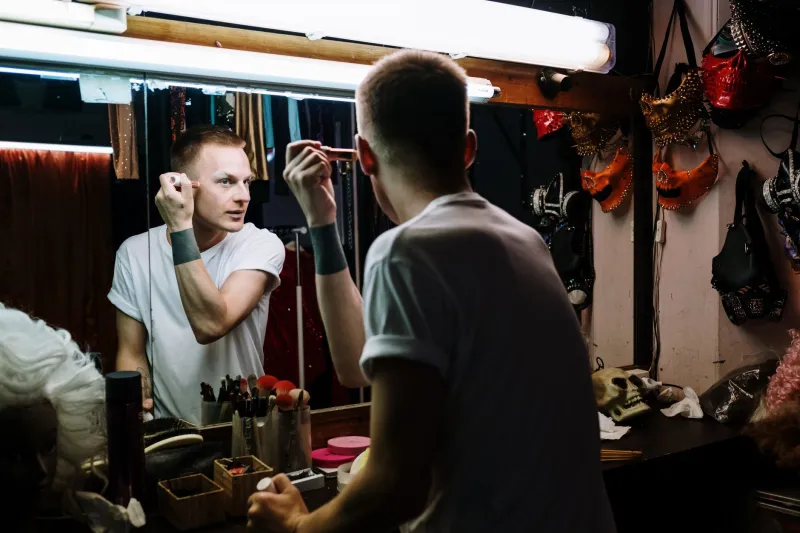
Pantomime season is almost here, and the dame is usually the loudest thing in the room. She arrives in a frock the size of a small conservatory, delivers a joke about the local council, and gets the audience shouting at the back of the hall. In 2026, though, a handful of experimental performers are looking at that racket and hearing something else: rhythm, texture, a ready-made score. Across a few regional productions, sound artists are being invited into panto rehearsals not to write songs but to listen to the machinery of the form — the trapdoor, the slamming door, the creaking flat, the audience call-and-response — and turn it into structured noise pieces. It is not a hostile takeover. It is more like a side room with the door propped open.
The Dame as Conductor
At a community theatre in Bristol, the panto is Mother Goose, and the late-night add-on is called Mother Goose and the Custard Tapes. The dame, Dame Hilda Haddock, is played by a local actor who has done panto for years and describes herself, reasonably, as a rhythm section in a wig. Sound artist Nia Pellow spent a week in rehearsals with contact mics taped to the trapdoor, the pantry door and the underside of the bench that gets slapped whenever someone says something saucy. The resulting 12-minute piece runs before the main show, with the audience invited to stamp, boo and shout on cue. Pellow does not ask them to sit quietly. She asks them to do what panto audiences already do, only in time.
The clever bit is that the dame triggers most of it. A raised eyebrow, a pause, a look at the stalls: these become cues for a low sub-bass rumble or a burst of delayed clapping. Hilda is not a noise artist in the conventional sense. She is a conductor who happens to be wearing a crinoline and a pair of comedy bloomers. The audience does not need to know that. They just know something feels different when the custard pie lands.
Twankey’s Spin Cycle
In Leeds, a panto version of Aladdin has taken a scruffier route. The production has paired its Widow Twankey, Dame Beverley Bravado, with tape-loop artist Toby Rigg for a short set in the bar after selected shows. Rigg’s setup is deliberately low-tech: two cassette machines, a contact mic on the washing-machine door used in the laundry scene, and a handful of pre-recorded clatters from the theatre’s own kitchen. The piece is called Twankey’s Spin Cycle, and it builds from the sound of a dame wrestling with a bedsheet into a dense, funny, surprisingly moving wall of hiss and thump.
The audience is mostly panto regulars, not noise heads. Some of them have come because their kids are in the chorus. Some have stayed because the bar is warm. Rigg says the best moments are when people recognise a sound — a dropped saucepan, the squeak of the trolley — and laugh before they realise they are listening to a composition. It is not a lecture about experimental music. It is a panto joke that has been stretched into a drone.
Midnight Feedback in Glasgow
Glasgow’s contribution is the strangest of the three. Cinderella has been reworked with a noise duo called Midden, and the ball scene now includes a section where the clock chime is fed through a delay pedal while the Ugly Sisters operate two channels of controlled feedback. The dame, Dame Cilla Slipper, spends most of the piece offstage, but her voice is sampled: every time she shouts ‘behind you’ in the first half, the phrase is captured and reused as a percussion hit in the second. The glass slipper has a piezo pickup glued to the sole. It sounds like a tiny, expensive mistake, which is roughly the point.
The production is careful to keep the experiment optional. The noise section happens after the main show, and families are told they can leave. That sounds like a compromise, and it is. But it also means the piece is not asked to carry the whole evening. It can be weird without ruining anyone’s nativity. The dame remains the star. The noise is the encore.
Why Panto Noise Works
Experimental music has an entry problem. The concert hall asks you to sit still, be quiet and pretend you understand the programme notes. Panto asks you to yell at a stranger in a wig. That is a much lower barrier. The form is already built on call-and-response, repetition and loud, ritualised silliness. A trapdoor slamming is a sound effect, but it is also a downbeat. A dame’s pause is a rest. The audience is already trained to participate, even if they would never call it that.
There is also a practical advantage: panto is seasonal, local and cheap to access. The experimental bits are not being sold as a night at the Wigmore Hall. They are being sold as an extra pint in the bar after Mother Goose. That matters. If the route into noise music runs through a regional theatre’s fire exit, so be it.
The Racket Behind the Racket
None of this is easy. Panto schedules are brutal — two shows a day, matinees, tired children, a stage manager who does not want a contact mic on the trapdoor because someone has to stand on it in act two. The sound artists have to work around the show, not through it. Some of the collaborations are one-offs. Some may not survive the first week. And not every audience wants a drone with their custard pie. In Leeds, Rigg says one punter asked if the tape machine was broken. In Glasgow, Midden reported a round of applause that may have been ironic.
But the small crop of productions doing this in 2026 are not trying to convert panto into an art installation. They are trying to hear what is already there. The dame is a noise artist because she has always been one: loud, timed, ridiculous, in charge of the room. The experimental performers are just putting a microphone where the joke lands.
As the 2026 season approaches, look out for the late-night listings, the bar shows, the extra ticket stubs. Oh yes, it is experimental. It is also just panto, with the volume turned up and the trapdoor wired for sound.