Turnstiles in C Minor: What Britain’s Empty Football Grounds Sound Like When the Crowd Goes Home
The fixture list says nothing. The turnstiles say plenty.
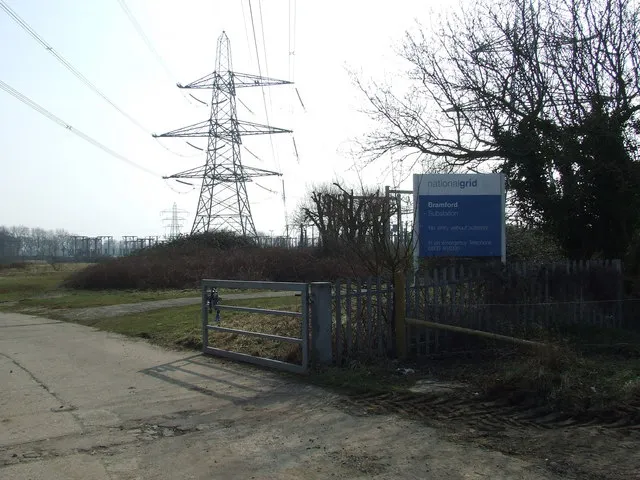
On a wet, wind-scoured morning in the 2026–27 winter break, Brackley Road — a 2,300-capacity non-league ground somewhere in the West Midlands — is not a football ground so much as a collection of resonant objects waiting to be struck. A metal turnstile clunks with the dull thud of a bass drum. A pie-hut shutter rattles like a snare. Somewhere above the main stand, a seagull has mistaken the floodlight rig for a cliff and is making its feelings known.
Nadia Corr is crouched by the touchline, clamping a contact microphone to a metal railing. She is one of a small but growing number of artists treating the off-season stadium as a site-specific instrument. Her kit is unglamorous: a handheld recorder, a tangle of cables, a flask of tea that has gone cold twice. “People think a ground is loud because of the crowd,” she says. “But the ground itself has a voice. You just have to wait until nobody’s shouting over it.”
The ground breathes when nobody’s watching
Corr’s project began, like many good ideas, as an accident. She was recording birdsong near a local ground last winter when the wind caught a loose gate and sent it swinging against a post. The rhythm was oddly musical — a slow, irregular pulse, like a metronome with a hangover. She came back the next week with better mics and a permission slip from the club secretary.
This winter, she is one of several artists working in empty grounds across the UK. The appeal isn’t nostalgia for the terraces, exactly. It’s something more forensic: an interest in what a place sounds like when its primary ritual is paused. Football grounds are built for noise. They are shaped to hold and project it. Remove the crowd and you hear the architecture doing its job on everything else — wind through the stands, rain on the roof, the low electrical hum of the floodlights, the turf sucking at your boots.
At Brackley Road, Corr has set up three turf mics just behind the goal. They pick up the squelch of the soil, the distant rumble of a delivery van, the click of a gate in the wind. She plans to layer these recordings with contact-mic captures of the turnstiles and the PA test tone — that flat, endless beep that grounds use to check the system before kick-off. “The test tone is the ghost of the matchday,” she says. “It’s the sound of everyone about to arrive.”
A Championship stadium with the volume turned down
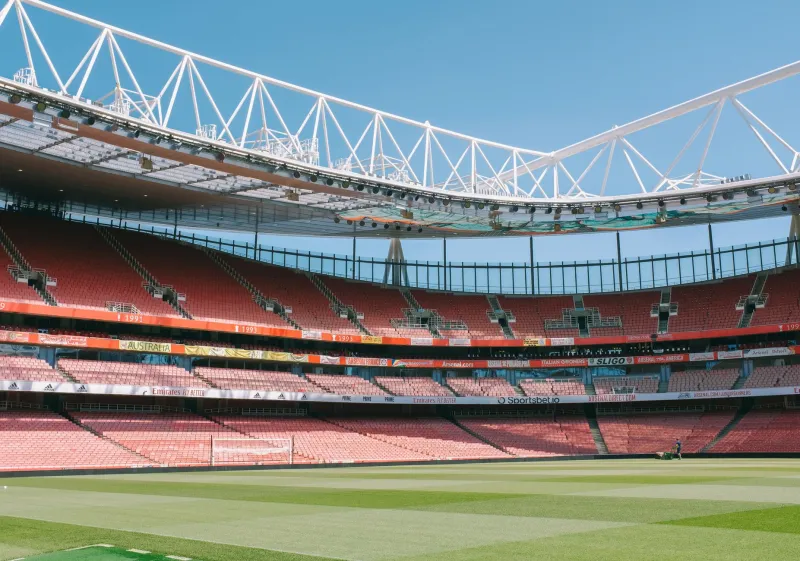
Eighty miles south, a 26,000-seat Championship stadium on the Sussex coast is having a quieter experiment. Ivo Marsh, a sound engineer who usually works on theatre tours, has been given access during the winter break to record the concourses, the players’ tunnel and the empty stands. He is not making a football album. He is making a record about anticipation.
“A stadium is a machine for managing adrenaline,” Marsh says, walking me through a concrete concourse that smells faintly of disinfectant and old beer. “Everything is designed to move people and noise in the same direction. When it’s empty, you hear the building’s own nervous system: the ventilation, the fridge in the kiosk, the way sound bounces off the underside of the roof.”
His favourite find is the PA system’s test sequence. Played into an empty bowl, the tones don’t sound like a warning. They sound like a drone piece — slow, harmonic, oddly devotional. He has recorded them at different volumes and from different seats, then slowed them down until the stands seem to breathe. “I’m not trying to recreate a crowd,” he says firmly. “That would be weird. I’m trying to hear what the crowd leaves behind.”
What silence reveals about ritual
There’s a risk, of course, that this all becomes a bit too poetic about empty space. Football grounds are not just acoustic chambers; they are workplaces, community hubs and, for many people, the most reliable social ritual in their week. The artists I speak to are careful about that. Corr has invited club volunteers to listen back to her recordings. Marsh is planning a free listening session in the supporters’ bar before the season restarts.
The most interesting thing about a crowdless ground is not the silence. It’s the evidence of preparation. The freshly painted turnstiles. The mown pitch. The programme boxes stacked and waiting. A stadium in winter break is a stage set between performances, and the recordings make that interval audible. They reveal belonging as something built from repetition: the same gate, the same seat, the same pre-match pint, the same roar. Take the people away and the ritual is still there, humming in the wiring.
A short listening guide for your local ground
You don’t need a contact mic or a club secretary’s email to hear your local stadium differently. You just need to go when it’s quiet — and ask first.
- Pick your moment. Midweek mornings are best. Avoid matchdays, training sessions and anything that looks like a private event. Email the club or ask at the office; most non-league grounds are run by volunteers who are happy to explain what’s off-limits.
- Walk the perimeter slowly. Listen for the things that usually get drowned out: a gate hinge, a loose panel, the hum of a floodlight transformer, the rattle of a bin lid in the wind.
- Use your phone, but keep it simple. Record in mono, hold still, and resist the urge to narrate. Thirty seconds of a turnstile is more interesting than three minutes of you describing it.
- Try after rain. Wet turf and metal railings give you a different palette — softer lows, stranger reflections. The ground sounds older in the wet.
- Don’t fake a crowd. The point is not to recreate the matchday. It’s to notice what the matchday usually hides.
- Listen back with headphones. Small sounds become huge. The PA test tone becomes a chord. The seagull becomes a soloist.
On my last morning at Brackley Road, the wind drops and the ground goes quiet enough to hear a kettle clicking on in the clubhouse. Corr stops recording and grins. “That’s the sound of the place waking up,” she says. “Not the crowd. The people who make the crowd possible.”
The 2026–27 season will restart soon enough. The turnstiles will clunk, the PA will crackle, the stands will fill. But for a few weeks this winter, the grounds are instruments in their own right — and they’re playing a set for anyone patient enough to listen.