Hearing the Grid: The Quiet Rise of Britain's Mains-Hum Musicians
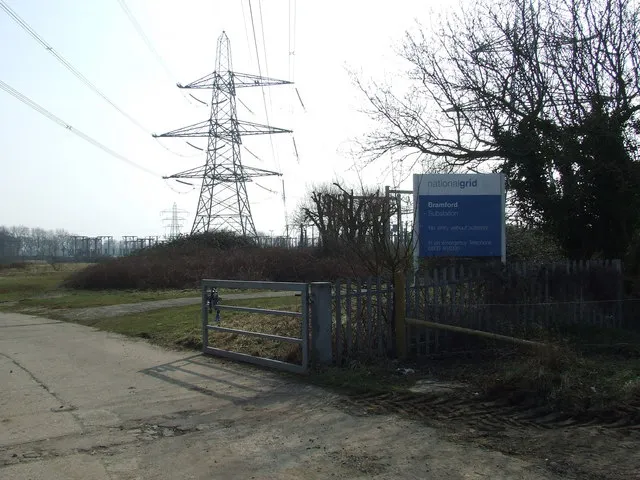
Photo: Keith Evans, CC BY-SA 2.0, via Wikimedia Commons
On a damp Thursday in November, in the back room of a repair café in Leeds, about thirty people are listening to a kettle. Not a performance of a kettle — the kettle is unplugged, sitting on a table next to a small mixing desk. The sound coming through the speakers is a low, steady drone: 50Hz, the frequency of the UK's mains electricity, captured from a substation a few streets away and played back at a volume just above the fridge hum. The audience sits in folding chairs, some with eyes closed. Someone's phone buzzes; they silence it. The drone continues.
This is the quiet edge of a small but growing scene. Across the UK, a loose network of sound artists, field recordists and synth tinkerers is treating the National Grid's 50Hz hum not as nuisance but as instrument. They record substations at night, tune modular rigs to mains frequency, and stage hushed gigs in unlikely venues: repair cafés, electrical heritage museums, the odd community hall with good wiring. The music is minimal, often improvised, and almost always quiet. And it is finding an audience — small, yes, but attentive.
The Substation as Studio
The practice starts with listening. 'Most people hear a substation as a buzz, a background annoyance,' says one Bristol-based artist who has been recording grid infrastructure since 2023. 'But if you stand there for ten minutes, you start to hear structure. There's a fundamental, then harmonics. It's a chord. It's just a very slow, very patient chord.'
Field recordings of substations — the transformer hum, the cooling fans, the occasional click of switchgear — form the raw material. Artists use contact mics, hydrophones pressed against transformer casings, and plain old condenser mics wrapped in windshields. The results are then stretched, looped or left untouched. Some recordings are released as albums; others are played live, often at low volume, as a kind of environmental drone.
Access is informal. Some record from public footpaths; others ask politely at depot gates. One artist in Sheffield has a standing arrangement with a local industrial estate. 'They think I'm a bit odd,' they admit, 'but they let me plug in.'
Tuning to the Grid
The other half of the scene is synthesis. Mains hum is 50Hz in the UK (60Hz in the US), which sits just below the lowest note of a standard bass guitar. For synth players, it's a tuning reference and a drone source. Some tune oscillators to 50Hz exactly, then build chords from the harmonic series: 100Hz, 150Hz, 200Hz. Others use the hum as a carrier for slow modulation, letting the grid's tiny frequency fluctuations — the grid is not perfectly stable — create gentle phasing and drift.
'It's the ultimate free oscillator,' says a London-based musician who runs a small label specialising in mains-based recordings. 'You don't have to tune it. It's already in tune with itself. And it's everywhere. Every building you walk into has a 50Hz hum somewhere. You just have to find it.'
There is a practical appeal, too. The gear is cheap: a contact mic, a portable recorder, a free afternoon. You don't need a studio. You need a plug socket and patience.
Why the Hum, Why Now?
The scene's growth is part of a broader turn towards ambient and drone music, but there's something more specific here. The 50Hz hum is infrastructure made audible — the sound of the systems that heat our homes, light our streets and charge our phones. In a decade of energy crisis, grid anxiety and climate dread, paying attention to the mains feels oddly resonant. It's not a protest song; it's a way of noticing.
There's also a tension. For some people, low-frequency hum is a genuine torment — the mysterious 'hum' reported in various UK towns, often blamed on industrial sources, has ruined sleep and sparked petitions. The artists are aware of this. 'We're not trying to romanticise something that gives people headaches,' one says. 'We're trying to listen to it differently. There's a difference between noise and sound. Sometimes you just need the right distance.'
Quiet Gigs, Loud Ideas
The live events reflect this. Gigs are advertised as 'listening rooms' rather than shows. Audience capacity is often under fifty. Phones are discouraged. Volume is kept low — loud enough to feel, quiet enough to hear the room. In repair cafés, the hum of the venue's own fridge or boiler often blends with the performance. 'You can't escape it,' says one organiser. 'So you might as well include it.'
At an electrical museum in the Midlands, a recent event paired substation recordings with a demonstration of vintage transformers. The audience moved between exhibits, headphones optional. It was part gig, part heritage tour, part meditation. Nobody clapped loudly. It felt wrong to.
The Sound of the Room We All Live In
So what is this? Ambient music, yes. Infrastructure critique, maybe. But mostly it's an invitation to hear the background of daily life as something deliberate. The 50Hz hum is not going away. It's the sound of the grid, the sound of the room we all live in. These artists are simply asking us to sit with it for a while.
As the Leeds gig ends, the kettle is plugged back in and switched on. The audience laughs — a small release. Then someone unplugs it again, and the drone resumes. The room settles. Outside, the substation down the road keeps humming, unheard by most, waiting for the next listener.